


Why Are MOQs in Yiwu So High? — A Thoughtful Sourcing Strategy for Japanese Companies
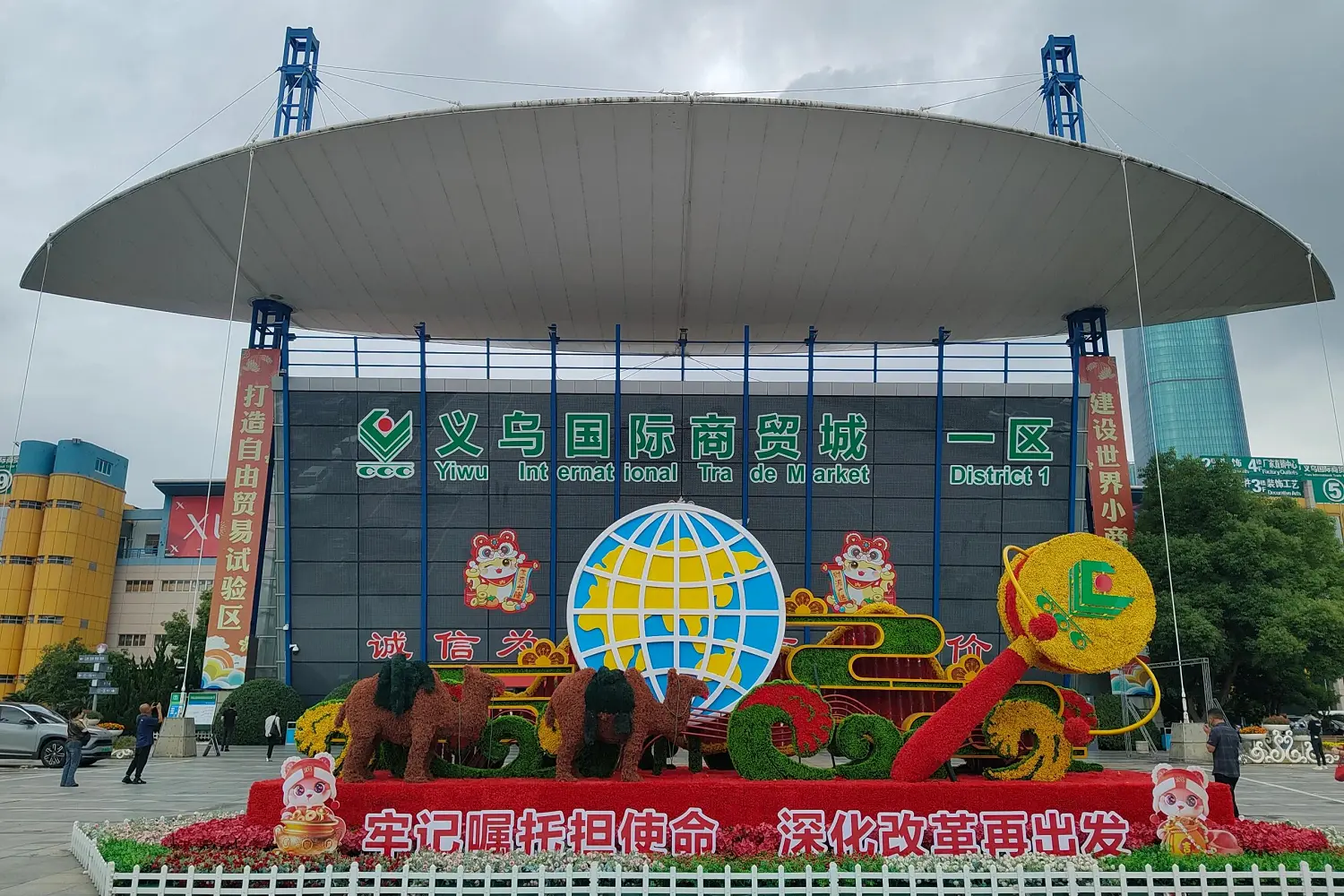
For many Japanese trading companies and buyers, Yiwu is an attractive sourcing destination known for its exceptional cost performance and an almost limitless variety of products.
However, once a procurement team visits Yiwu International Trade City (Futian Market) and begins negotiating B2B transactions with local factories and wholesalers, many companies encounter a significant obstacle: MOQ (Minimum Order Quantity).
“Why does a factory require an order of 3,000 units for such a simple general merchandise product?”
“We only want to start with 100 units for a test market launch. Why won’t the supplier accept it?”
Based on years of hands-on sourcing experience in Yiwu, this guide presents an approach that does not rely on aggressive price negotiations or simply pressuring suppliers to lower their MOQ. Instead, we examine the structural reasons behind Yiwu’s MOQ requirements and provide practical negotiation strategies that take into account the quality standards, procurement processes, and business practices of Japanese companies.
1. Why Are Yiwu MOQs Set This Way? — Start by Understanding the Structure
The first step in dealing with MOQ is understanding how Yiwu suppliers determine their minimum order quantities. MOQs in Yiwu are not arbitrary numbers. They are generally shaped by three structural factors.
1. Stock Products vs. Custom Production
| Category | Description | Typical MOQ |
|---|---|---|
| Stock products (spot purchases) | Products already available in the supplier’s inventory | As low as one carton |
| Custom / made-to-order production | Changes to packaging, color, shape, size, and other specifications | Often several thousand units or more |
Key point: Simply switching a production line from a general-purpose setup to a dedicated setup creates changeover costs for the factory.
2. MOQ of the Raw Materials Themselves
Consider ordering a Japanese-style fabric storage box, for example.
- The Yiwu factory may be capable of producing 300 units, but
- the fabric wholesaler may require a minimum dyeing or printing quantity of 1,000 meters.
In this situation, the factory cannot reasonably take on the inventory risk associated with excess fabric. As a result, the MOQ may be raised to 2,000 units or more.
3. Mold and Machine Setup Costs
For plastic products, injection-molded products, and metal components, mold changes and machine adjustments such as cleaning and trial runs generate material waste and labor costs every time. If the production lot is too small, the fixed costs allocated to each unit can exceed the actual manufacturing cost of the product itself.
Looking deeper, Yiwu suppliers also factor in several less visible risks when setting their MOQs:
- Inventory risk: The burden of excess materials purchased specifically for a small production lot
- Quality risk: Yield risks associated with meeting the higher quality standards required for the Japanese market
- Cash-flow risk: With small quantities, gross profit may be too limited to justify the supplier’s collection and recovery risks
In other words, MOQ is not simply a “quantity threshold.” It is also a boundary of the factory’s risk tolerance. Without understanding this structure, simply asking a supplier to “lower the MOQ” is unlikely to work.
2. A Category-Based MOQ Flexibility Matrix for Japanese Buyers
The Japanese market’s high quality expectations (QC) and detailed inspection standards directly influence how suppliers approach MOQ.
1. Categories with Relatively Flexible MOQs
| Category | Reason |
|---|---|
| Semi-handmade and sewn products (canvas bags, eco bags, plush toys, fabric storage bags, etc.) | They rely heavily on manual labor and require relatively little machine setup, making small-batch production easier to accommodate. |
| Higher-priced, high-value gift products (premium acrylic stands, interior objects, custom metal badges, etc.) | The higher unit price makes it easier to recover fixed costs even at lower quantities. |
| Products using surplus factory materials or standard specifications | Existing materials can be used, eliminating the need for additional material purchases. |
2. Categories with Highly Rigid MOQs
| Category | Reason |
|---|---|
| Low-cost injection-molded small products (custom-shaped plastic medicine cases, custom hooks, etc.) | Mold costs can reach tens of thousands of RMB and can only be amortized through mass production. |
| Products requiring Japanese certifications (PSE, Food Sanitation Act, JIS, etc.), such as food-contact utensils, toys, and underwear | Batch-level compliance costs can be extremely high. |
| Products dyed or printed to specified PANTONE colors (color box covers, socks, etc.) | Dyeing factories generally have fixed minimum lots, while small-batch dyeing may require additional surcharges. |
For products that require traceability of production history for the Japanese market, particularly food-contact products, toys, and textile products, factories may need to prepare raw material certificates and test reports for each batch. These administrative and compliance costs can also make MOQs more rigid. Once a production line has been set up, running a larger quantity within the same batch generally improves quality consistency. As a result, factories often view “small batch” production as carrying a higher quality risk. Understanding this perspective before entering negotiations demonstrates a professional approach to sourcing.
3. Five Practical Strategies for Overcoming the Yiwu MOQ Barrier
When a Yiwu supplier tells you, “That quantity does not meet our MOQ,” simply demanding a lower price or MOQ is often counterproductive. It may even make the buyer appear inexperienced.
Instead, consider the following five practical approaches based on the actual needs of Japanese companies.
Strategy 1: Use “Micro-Customization” Instead of Deep Customization
Instead of commissioning a completely new original product, start with a supplier’s high-quality existing product or stock item and add only a few light customization elements to adapt it to the Japanese market:
- Add Japanese hang tags
- Apply barcode stickers (JAN codes)
- Include Japanese instruction manuals
- Replace the standard packaging with dedicated outer packaging
Background: Over the past 10 to 20 years, the design and quality of Chinese-made products have improved significantly, and the proportion of ODM sourcing has increased. Compared with full OEM production from scratch, micro-customization based on an ODM product requires a much lower MOQ and shorter lead time, making it particularly suitable for testing new products in the market.
Expected benefit: The MOQ for the product itself can potentially be reduced to stock-level quantities, such as 100–300 units, while additional MOQs apply only to printed materials such as stickers, packaging, and instruction manuals.
Additional warning: The “odd carton quantity” problem
One practical risk is often overlooked:
The factory’s shipping unit (carton) may not match the Japanese sales unit (individual item or set).
For example:
- One factory carton contains 50 units.
- The Japanese sales unit consists of 3 units per set.
In this case, ordering by the carton can eventually create excess inventory or an incomplete lot, which may become dead stock. The cost of this mismatch can sometimes have a greater impact than a small difference in unit price.
Recommended measures:
- At the quotation stage, compare the number of units per carton with the Japanese sales unit.
- If necessary, arrange repackaging in Yiwu so that the shipment matches the Japanese sales unit.
Strategy 2: Accept Tiered Pricing — Adjust the Unit Price Instead of the Quantity
Because Japanese companies tend to have high quality and inspection requirements, small-batch orders can represent a high-risk, low-margin transaction for factories.
One possible proposal is:
“This is the initial market testing and quality verification phase, so we are willing to pay a 15%–30% premium on the unit price for the first order. In return, could you arrange a smaller production lot?”
By guaranteeing the factory a reasonable profit margin, you can significantly improve the chances of reaching an agreement.
Strategy 3: Narrow Down Your SKUs and Concentrate Quantity per Item
Many Japanese buyers want to place an initial order covering multiple colors and multiple sizes, such as 5 colors × 4 sizes = 20 SKUs.
However, in the Yiwu market, MOQ is often calculated per color and per style.
The better approach:
- Focus on the one or two core products or sizes with the clearest demand in the Japanese market.
- Concentrate your sourcing budget and secure a quantity sufficient for the factory’s production line to operate efficiently.
Strategy 4: Increase the Deposit and Demonstrate Your Commitment as a Japanese Buyer
One of the biggest concerns for Yiwu factories and wholesalers is that a buyer may abandon a shipment after placing a small “test order.”
During negotiations, consider adjusting the common “30% deposit + 70% balance” arrangement as follows:
- 50% deposit for small and medium-sized lots
- 100% payment in advance for very small orders
This can substantially reduce the factory’s counterparty credit risk and make the supplier more willing to accept an MOQ exception.
Strategy 5: Clearly Present Your Test-Sales Plan and Long-Term Roadmap
“We will place much larger orders later.”
Yiwu factories hear vague promises like this all the time. They also know that what Japanese companies describe as a “large order” can, in practice, be a relatively limited quantity.
Instead, provide a specific and professional explanation:
“We will use these 200 units for test sales on Japanese e-commerce platforms.”
“We will also use them as sample products for trade shows in Japan. Depending on the response after the exhibition, we plan to place a full production order of 2,000 units within 30 days.”
By presenting a specific sales channel, schedule, and evaluation criteria, the factory is more likely to view the order not as a high-risk small batch, but as the first stage of a planned larger production cycle.
The right approach:
- Recognize that the initial test lot and the full production lot should have different pricing structures.
- Agree with the factory from the beginning that quantity-based price negotiations will be conducted again when moving to full production.
- Where appropriate, establish an escalation or price-review clause that takes into account raw material market conditions, exchange rates, and production schedules.
Clearly defining this tiered pricing structure gives the factory greater visibility into the long-term sourcing plan and makes it easier to establish a sustainable working relationship.
4. What We Can Offer When You Face MOQ Challenges in Yiwu
For Japanese trading companies and buyers, the biggest challenge in Yiwu sourcing is often not finding products, but managing the high cost of cross-border communication.
When evaluating sourcing costs, it is also important to consider the multilayered cost structure involving quality, warehousing, and logistics—not just the product price.
After more than 40 years of development, the Yiwu market has made significant progress in the range, quality, and design of its products. However, because Yiwu suppliers serve not only the Chinese domestic market but also diverse markets across the Middle East, Southeast Asia, Africa, Latin America, and other regions, competition is highly commoditized. For many suppliers, producing products at the lowest possible cost remains the top priority.
As a result, the production processes and quality-control systems of many factories and shops remain relatively loose, and they do not automatically meet the strict inspection requirements of the Japanese market, such as needle detection, zero-defect expectations, and Japanese-language packaging compliance.
We have developed a deep supply-chain network across Yiwu and surrounding industrial clusters and provide the following end-to-end services for Japanese buyers with demanding quality requirements.
1. Flexible Supply Chain Integration — Small Lots and Short Lead Times
With an established presence in Yiwu, we have identified and carefully selected high-quality small and medium-sized factories capable of meeting Japanese quality requirements, as well as production lines at larger factories that can accommodate residual or partial lots.
By leveraging our bargaining power and aggregated purchasing demand from multiple buyers, we can achieve MOQ reductions that would be difficult for an individual buyer to negotiate independently.
2. Local Secondary Processing and Japanese-Compliant Packaging
Even when a factory provides only basic packaging or the product itself, we can transfer the products to an assembly facility in Yiwu and handle the following commercialization processes as a package:
- Applying Japanese labels
- Replacing packaging bags
- Including Japanese instruction manuals
- Reconfiguring products for retail fixtures and display packaging
3. Strict Quality Inspection Based on Japanese Market Standards
We conduct thorough pre-shipment quality screening in Yiwu:
- Sampling inspections based on AQL 2.5
- 100% full inspection for important projects
This reduces the risk of defective products reaching Japan and helps prevent claims, returns, replacement costs after arrival in Japan, as well as duplicate transportation and customs costs.
It is important to understand that the meaning of “Japanese quality” varies depending on the business model and sales channel.
- Mass retailers (GMS): Consistency across the entire production lot is the top priority.
- Department stores: Appearance and packaging aesthetics are especially important.
- E-commerce: Consistent quality at the individual packaging level is essential.
- Novelty and promotional products: Reproduction accuracy of the design may matter more than functionality.
We first align on a customized inspection standard based on the customer’s sales channel and then design the inspection process accordingly. This definition of quality based on the actual Japanese sales environment is what allows us to provide not merely “inspection passed” products, but quality assurance directly connected to successful sales.
4. Acting as a China Supply Chain Management and Logistics Hub
For trading companies and businesses that source from China throughout the year, there is often a need to manage Chinese sourcing, delivery schedules, quality, and logistics without establishing a full-scale local subsidiary or representative office in China.
As a partner providing the functions of a general trading company specializing in the Japanese market, we offer the following customizable trade services:
- Collection and shipment consolidation across multiple suppliers
- Centralized management of export documents, including commercial invoices, packing lists, and certificates of origin
- Pre-assessment and management of customs risks
- Supplier coordination for delivery schedules and quality claims
This allows customers to significantly reduce the indirect costs associated with supply chain management, including personnel resources, time, and communication costs.
Conclusion: MOQ Is a Blueprint, Not a Barrier
MOQ in Yiwu sourcing is not simply an obstacle. It is a blueprint that reflects the factory’s cost structure, risk tolerance, and production logic.
What Japanese companies need is not simply to ask:
“How can we buy more cheaply?” Instead, the better question is: “How can we understand the factory’s production logic and design sourcing conditions that align with our own sales plan?”
We hope the five strategies and practical considerations presented in this guide will help you move Yiwu sourcing beyond simply purchasing at a low price and toward the development of a strategic and sustainable supply chain.
If you are facing challenges with sourcing from Yiwu, please feel free to contact us.